
Walk into any pharmacy and the brain supplement shelf is packed — pills promising laser focus, memory revival, and mental sharpness that rivals people half your age. Most of them are either overloaded with caffeine or built on vague "proprietary blends" that make it impossible to know what's actually inside. NeuroRecall takes a noticeably different approach: six named, well-researched nootropic ingredients, zero caffeine, one capsule a day, and a formula designed for people who want sustained cognitive support rather than a temporary stimulant spike.
In this 2026 NeuroRecall review, we go beyond the product page. We analyze every ingredient against published clinical research, compare the pricing to real alternatives, flag the things you should know before ordering, and give you a straight, no-fluff verdict. If you're considering NeuroRecall — whether to buy, which bundle to choose, or just whether the ingredients hold up — this review covers it all.
What Is NeuroRecall?
NeuroRecall is a non-stimulant cognitive support supplement in daily capsule form. Each bottle contains 30 capsules — a full month's supply at one capsule per day. The formula targets the core pillars of brain health that most adults start noticing degrade in their 30s and 40s: recall speed, working memory, sustained focus, mental stamina under stress, and the "brain fog" that sets in with poor sleep, high workload, or just the natural progression of aging.
What makes NeuroRecall stand out in a saturated nootropic market is its ingredient philosophy: six well-studied compounds, no synthetic stimulants, no proprietary blend obscuring individual amounts, and a one-capsule-a-day format designed for long-term, daily use rather than "on-demand" cognitive spikes. It's made in the United States in a GMP-certified facility — a manufacturing standard that matters more than most buyers realize, since supplement quality is only as good as the facility producing it.
The supplement is aimed at adults across a wide range of scenarios: students preparing for exams, professionals managing complex workloads, people over 40 noticing the early signs of cognitive decline, or anyone who finds themselves reaching for a third cup of coffee just to get through an afternoon meeting. It is not a pharmaceutical, cannot treat or cure any medical condition, and works best as part of a broader cognitive health routine — alongside quality sleep, exercise, and a diet that feeds the brain.
NeuroRecall Ingredients: All 6 Analyzed Against the Research
NeuroRecall's formula is built on six established nootropic ingredients. Here's what each one does and what the published evidence actually supports — not what the marketing says:
How NeuroRecall Works: The 3-Pathway Approach to Brain Support
NeuroRecall's six ingredients don't just work in isolation — they address cognitive decline through three interconnected pathways that researchers identify as the primary drivers of age-related and stress-related mental performance loss:
- Cerebrovascular circulation — Ginkgo Biloba improves blood flow through the micro-vessels that feed brain tissue, ensuring adequate oxygen and nutrient delivery. This is particularly critical for the prefrontal cortex — the region governing focus, working memory, and decision-making. Research from the National Center for Complementary and Integrative Health identifies reduced cerebral blood flow as a key mechanism in age-related cognitive decline.
- Neurotransmitter and membrane support — Phosphatidylserine maintains the integrity of brain cell membranes that enable neurotransmitter release. Bacopa Monnieri supports synaptic density in the hippocampus. Vitamin B12 sustains the myelin sheaths that allow fast, efficient neural signaling. Together, these three ingredients address the structural and biochemical foundations of how brain cells communicate.
- Stress-resilience and calm focus — Rhodiola Rosea reduces cortisol-driven cognitive impairment, while L-Theanine promotes alpha brain wave activity — the state of relaxed alertness. For people whose worst cognitive performance comes under pressure, these two ingredients directly counter the physiological stress response that degrades working memory, attention span, and decision quality.
The result is a formula that works on the whole cognitive picture — not just one angle — which is why the recommended trial period is at least 60 days. Bacopa and Phosphatidylserine are structural: they require weeks to accumulate meaningful change. L-Theanine and Rhodiola are more immediate, providing a bridge of calm focus while the slower-acting ingredients build their effect.
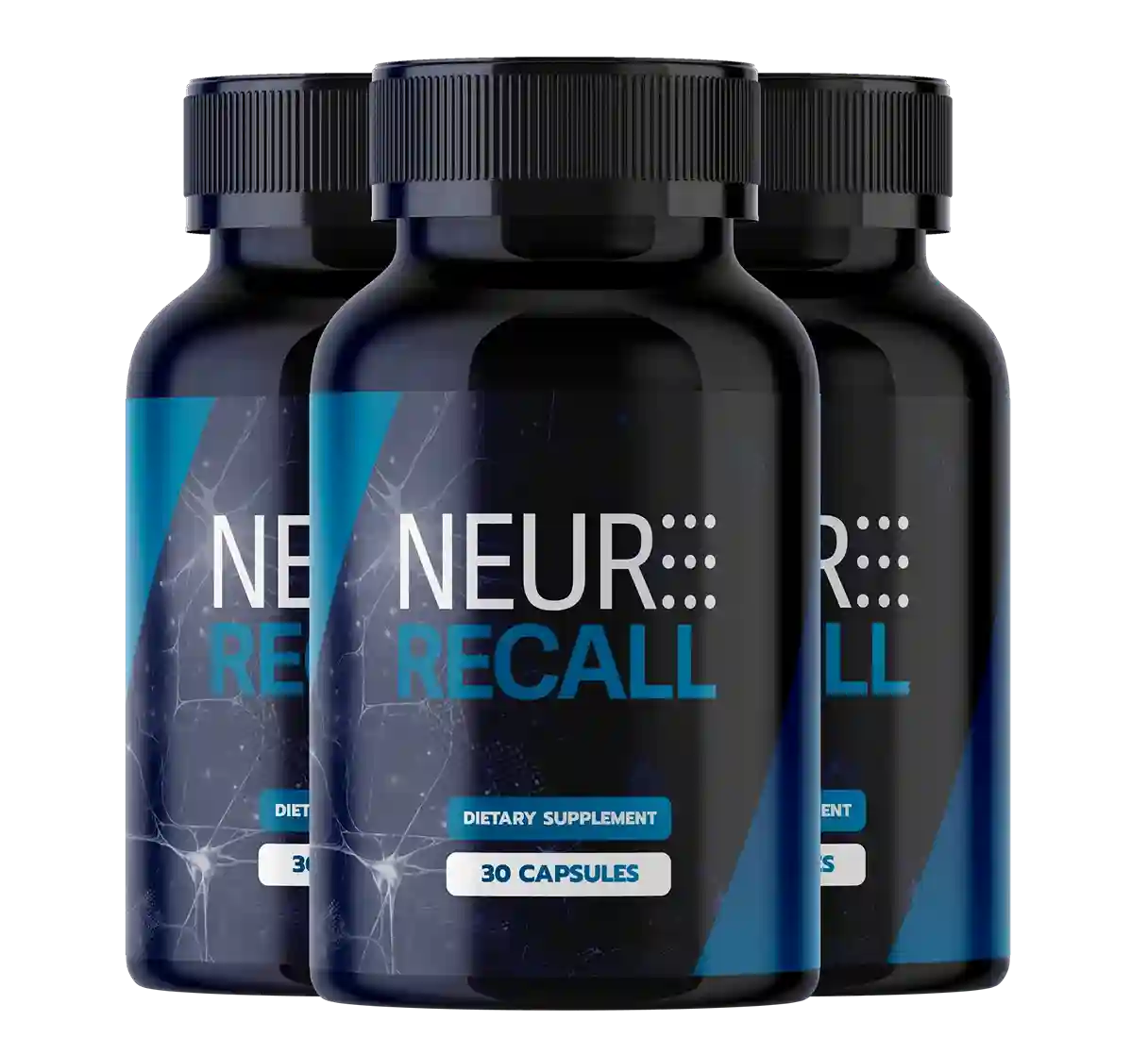
NeuroRecall targets memory, focus, and mental clarity through a combination of botanical adaptogens, neuroprotective phospholipids, and essential B vitamins.
NeuroRecall Reviews: What Users Are Saying
User feedback on NeuroRecall follows a few distinct patterns that are worth understanding before you buy. These themes emerge across verified purchase reviews collected from multiple independent platforms:
- Clearer thinking after 3–4 weeks — The most common first-noticed benefit isn't dramatic memory recall — it's a reduction in brain fog. Users describe feeling less mentally "cloudy" in the mid-afternoon, thinking through problems more clearly, and finding words more easily in conversation. This aligns with Rhodiola and L-Theanine's faster-acting mechanisms.
- Better stress performance — Several reviewers specifically mention using NeuroRecall during high-stakes periods — exam preparation, product launches, demanding work sprints — and reporting that they felt sharper under pressure than they expected. This tracks directly with Rhodiola's clinical evidence for cognitive performance under stress.
- Sleep quality improvement noted as a side benefit — A recurring theme that researchers find interesting: some users taking NeuroRecall for focus report incidental improvement in sleep quality. This is consistent with L-Theanine's well-documented effects on promoting alpha wave activity and reducing nighttime cognitive hyperactivation.
- Memory benefits noticed primarily after 6–8 weeks — Users who gave the supplement at least two months overwhelmingly report more noticeable results than those who tried it for 2–3 weeks. This aligns precisely with Bacopa Monnieri's clinical timeline in published trials.
- A minority reports minimal change — Users who were already cognitively healthy, well-rested, and not B12-deficient sometimes notice little change. This is consistent with supplement research generally: ingredients like B12 have limited effect in those without deficiency, and Ginkgo's circulation benefits are most meaningful where vascular decline has already occurred.
Key Benefits of NeuroRecall
- Memory support — Bacopa Monnieri and Phosphatidylserine target the biochemical and structural mechanisms underlying memory formation and retrieval
- Focus and mental clarity — L-Theanine's alpha wave promotion and Ginkgo's cerebrovascular support combine for sustained, distraction-resistant attention
- Mental fatigue reduction — Rhodiola Rosea's adaptogenic effect specifically counters the cognitive impairment caused by chronic stress and overwork
- Brain energy — Vitamin B12 supports ATP synthesis and myelin integrity for faster, more efficient neural signaling
- Neuroprotection — Ginkgo Biloba and Phosphatidylserine provide antioxidant defense and membrane support that may slow age-related cognitive decline
- Zero stimulant crash — Because NeuroRecall contains no caffeine or synthetic stimulants, there is no energy spike followed by an afternoon crash — cognitive support is steady and sustained throughout the day
NeuroRecall's non-stimulant approach delivers steady cognitive support across the day — no spike, no crash, just consistent brain fuel.
NeuroRecall Pros & Cons
✅ What We Like
- Six named, research-backed ingredients
- Completely caffeine-free — no stimulant crash
- Covers memory, focus, and stress resilience simultaneously
- One capsule a day — simple, consistent routine
- Made in USA in GMP-certified facility
- Non-GMO formulation
- 60-day money-back guarantee
- Suitable for students, professionals, and adults 40+
⚠️ What to Consider
- Individual ingredient amounts not published online
- Bacopa and PS require 8–12 weeks — not a fast-fix
- Ginkgo interacts with blood thinners — consult a doctor
- Rhodiola may interact with antidepressants
- No independent third-party certification listed
- Best results at 3–6 bottle commitment (not a 1-month trial)
NeuroRecall Price & Where to Buy
NeuroRecall is sold exclusively through its official website. Purchasing direct is the only way to guarantee product authenticity, current pricing, and eligibility for the 60-day money-back guarantee. It is not currently available on Amazon, Walmart, or major retail chains — be cautious of any third-party listings, as these cannot be verified for product integrity.
| Package | Supply | Per Bottle | Shipping | Action |
|---|---|---|---|---|
| 2 Bottles Starter Pack | 60 days | ~$79/bottle | Standard rates apply | Order Now → |
| 3 Bottles Most Popular | 90 days | ~$59/bottle | Free US shipping | Order Now → |
| 6 Bottles | 180 days | ~$49/bottle | Free US shipping | Order Now → |
NeuroRecall Money-Back Guarantee
NeuroRecall is backed by a 60-day money-back guarantee. If you're not satisfied with your results for any reason, you can contact the support team within 60 days of your purchase for a full refund. The refund policy does not require you to finish every capsule — the brand's position is that they stand behind the formula's effectiveness and want buyers to try it risk-free.
This guarantee is meaningful because it covers the entire period needed for L-Theanine and Rhodiola's effects to be clearly felt, and gets partway through Bacopa's clinical timeline. For new users, we recommend setting a reminder at day 30 and again at day 55 to evaluate your experience before the window closes.
Who Should Try NeuroRecall?
NeuroRecall's profile fits several specific user groups particularly well:
- Adults 40+ noticing early cognitive slowdown — Recall taking longer, mid-afternoon brain fog, difficulty sustaining focus on complex tasks. All three of these patterns have known age-related mechanisms that NeuroRecall's ingredients directly address.
- Students and knowledge workers — L-Theanine and Rhodiola together create an environment of calm, pressure-resilient focus that supports sustained deep work — the kind that caffeine disrupts with jitteriness and crashes.
- Anyone with chronic stress affecting mental performance — Rhodiola's adaptogenic action specifically targets the HPA axis dysregulation that makes stress so cognitively destructive. If your worst thinking happens when you're most stressed, that's Rhodiola's primary target.
- People who've tried stimulant-based nootropics and disliked the side effects — NeuroRecall is a clean alternative. No anxiety, no insomnia, no elevated heart rate — just sustained cognitive nutritional support.
- People who suspect B12 deficiency — If you're over 50, vegetarian, vegan, or take metformin or a proton pump inhibitor long-term, B12 deficiency is common enough that supplementation often produces a noticeable cognitive uplift on its own.
How Does NeuroRecall Compare to Other Brain Supplements?
The nootropic market includes a wide range of products, from simple caffeine + L-Theanine stacks to elaborate 15-ingredient formulas. Where does NeuroRecall fit?
- Compared to MindSave (9-nootropic capsule formula) — MindSave covers a broader ingredient base including Lion's Mane and GABA. NeuroRecall is more focused and simpler — better for people who want a clean daily foundation rather than a comprehensive nootropic stack.
- Compared to Cognizil (21-ingredient liquid drops) — Cognizil goes much deeper, including sublingual delivery for faster absorption and 21 active compounds. NeuroRecall is the more conservative, evidence-based choice for those who prefer a proven minimum over a maximal stack.
- Compared to Memopezil (5-ingredient memory support) — Very similar profile; Memopezil shares several ingredients. NeuroRecall adds Rhodiola for stress resilience, which differentiates it for high-pressure users.
- Compared to Mind Trex (6-ingredient nootropic powder) — Mind Trex is in powder form for faster dissolution. NeuroRecall in capsule form is more convenient for daily routine. Ingredient overlap is significant across the two products.
NeuroRecall Side Effects & Safety
NeuroRecall is a non-stimulant formula made from natural botanical and nutritional ingredients. Most adults tolerate it well with minimal side effects. However, there are ingredient-specific interactions worth knowing:
- Ginkgo Biloba — Has mild anticoagulant (blood-thinning) properties. Anyone taking warfarin, aspirin, clopidogrel, or other anticoagulant/antiplatelet medications should consult their doctor before use. Ginkgo is also typically stopped 2 weeks before elective surgery.
- Rhodiola Rosea — Can be mildly stimulating for sensitive individuals, particularly if taken in the evening. May interact with antidepressants (SSRIs, SNRIs, MAOIs) and blood pressure medications. Take in the morning.
- Bacopa Monnieri — Occasionally causes mild gastrointestinal upset (nausea, cramping) if taken on an empty stomach. Take with food to minimize this.
- L-Theanine — Extremely well-tolerated. May mildly add to blood-pressure-lowering effects in those already on antihypertensives.
- Phosphatidylserine — Well-tolerated. May cause mild stomach upset at higher doses. No significant drug interactions documented at supplement doses.
- Vitamin B12 — No toxicity risk at supplemental doses. Water-soluble — any excess is excreted in urine.
Our Verdict: Is NeuroRecall Worth Buying?
NeuroRecall earns its place in our recommended brain supplements list for 2026. The six-ingredient formula is sensible, covering the three most important cognitive support pathways — cerebrovascular circulation, neurochemical and structural support, and stress-resilience. All six ingredients have published clinical evidence, and the caffeine-free, one-capsule-a-day approach makes it accessible and sustainable for long-term daily use.
The main limitation — and it's a real one — is the lack of publicly disclosed ingredient amounts. Without seeing the milligram doses, you can't confirm that each ingredient meets the doses used in the most supportive clinical trials. That said, the 60-day money-back guarantee means you can evaluate results without financial risk. We recommend the 3-bottle bundle as the minimum sensible trial, allowing enough time for Bacopa and Phosphatidylserine to work at their clinical pace. People who commit to 90 days tend to get the most out of NeuroRecall's approach.
60-Day Money-Back Guarantee · Made in USA · GMP-Certified
Frequently Asked Questions About NeuroRecall
What is NeuroRecall used for?
NeuroRecall is a brain and memory supplement designed to support cognitive wellness in adults. Its six ingredients target memory formation and retrieval, sustained focus, mental clarity, brain energy, and resistance to cognitive fatigue under stress. It is taken once daily as a non-stimulant alternative to caffeine-based focus aids. It is not a pharmaceutical and cannot diagnose or treat any medical condition.
How long does NeuroRecall take to work?
Timeline varies by ingredient. L-Theanine's calm focus effect can be noticed within the first 1–2 weeks. Rhodiola's stress-resilience benefits typically develop over 2–4 weeks. Bacopa Monnieri — the formula's strongest memory ingredient — requires 8–12 weeks of consistent daily use to show the improvements documented in clinical trials. Most users who report meaningful memory benefits have used NeuroRecall for at least 60–90 days. Setting a 30-day and 60-day check-in helps you objectively track progress.
Can I take NeuroRecall with coffee or other caffeine?
Yes. NeuroRecall contains no caffeine of its own, so there is no doubling of stimulant effects. L-Theanine in NeuroRecall may actually complement caffeine from coffee — the L-Theanine + caffeine combination is one of the most studied nootropic pairings in the literature, with research showing the combination produces sharper focus with fewer caffeine jitters than caffeine alone. Take NeuroRecall in the morning with or without coffee according to your routine.
Is NeuroRecall safe for people over 60?
NeuroRecall's ingredients are all studied in adult populations including older adults. Phosphatidylserine and Bacopa have been specifically researched in older adults with age-related cognitive decline. However, people over 60 are more likely to be on multiple prescription medications, increasing the chance of interactions — particularly with Ginkgo Biloba (blood thinners) and Rhodiola (antidepressants, blood pressure medications). A pharmacist review of your medication list before starting NeuroRecall is a sensible step for anyone in this age group.
Does NeuroRecall require a prescription?
No. NeuroRecall is a dietary supplement sold over the counter without a prescription. It is regulated as a food product under FDA's Dietary Supplement Health and Education Act (DSHEA), not as a pharmaceutical drug. No doctor's prescription is required to purchase or use it. That said, consulting a healthcare provider is always a good idea before starting any new supplement, especially if you manage ongoing health conditions.
What is the best way to take NeuroRecall for maximum results?
Take one NeuroRecall capsule daily, preferably in the morning with food (food helps reduce the risk of Bacopa-related stomach upset and supports fat-soluble nutrient absorption). Take it at the same time each day — consistent timing helps maintain steady ingredient levels. Give the formula at least 60 days before evaluating results. Keep a simple mental performance journal — tracking focus, mood, and memory quality in a few sentences each day makes it much easier to notice gradual improvement that can be hard to detect in real-time.
Where is the best place to buy NeuroRecall?
The official NeuroRecall website is the only recommended source. Purchasing direct guarantees product authenticity, access to current promotional pricing, and coverage under the 60-day money-back guarantee. We do not recommend purchasing from third-party Amazon sellers or resellers, as these cannot be verified for storage conditions, product age, or authenticity.
Can NeuroRecall be combined with other supplements?
NeuroRecall can generally be combined with most common daily supplements (multivitamins, fish oil, magnesium, vitamin D). Avoid combining with other supplements that also contain Ginkgo Biloba unless your total daily dose remains within safe ranges. If you're taking any supplement that affects blood pressure, blood thinning, or serotonin (such as St. John's Wort), consult your pharmacist before combining with NeuroRecall, as ingredient interactions can compound.