
Prostate specific antigen (PSA) is a protein your prostate gland produces. Doctors measure it with a simple blood test to screen for prostate cancer, enlarged prostate (BPH), and prostatitis. A normal PSA level is generally under 4.0 ng/mL for most men, though age-specific ranges apply. A single high PSA does not automatically mean cancer — but it does mean you need to talk to your doctor right away. Below, we break down everything men need to know about PSA in plain language.

Prostate specific antigen is one of the most talked-about — and most misunderstood — markers in men's health. Your doctor orders a prostate specific antigen blood test at your annual checkup. You get a number back. But what does that number actually mean? Is a PSA of 3.5 good or bad? What if it went up from last year? And can you do anything about it?
This guide answers every common question about prostate specific antigen and PSA testing in clear, simple language. We cover what prostate specific antigen is, what normal PSA levels look like by age, what causes high PSA, what happens after an elevated result — and which prostate supplements may support healthy prostate function alongside medical care.
What Is Prostate Specific Antigen (PSA)?
Prostate specific antigen is a protein produced almost entirely by cells in the prostate gland — a small walnut-sized gland in men that sits below the bladder and helps produce semen. Both healthy and abnormal prostate cells make PSA. Most of it stays in the prostate and semen, but a small amount leaks into the bloodstream.
A prostate specific antigen blood test measures how much of this protein is circulating in your blood. The result is reported in nanograms per milliliter (ng/mL). The test takes just a few seconds — it's a routine blood draw, usually done as part of a broader men's health panel.
Prostate specific antigen was discovered in 1979 and approved by the FDA as a prostate specific antigen cancer marker in 1986. Since then, it has become the most widely used screening tool for prostate cancer in the United States. According to the American Cancer Society, routine PSA testing has helped detect prostate cancer at earlier, more treatable stages in millions of American men.
Normal PSA Levels by Age — 2026 Reference Table
PSA naturally rises with age as the prostate grows. What's normal for a 70-year-old would be flagged as high for a 45-year-old. That's why age-specific reference ranges exist. The table below reflects widely used guidelines from the Oesterling et al. age-specific reference ranges and current clinical guidance.
| Age Range | Normal PSA (ng/mL) | Borderline (ng/mL) | Elevated (ng/mL) | Status |
|---|---|---|---|---|
| 40–49 | Under 2.5 | 2.5 – 3.5 | Above 3.5 | Younger men |
| 50–59 | Under 3.5 | 3.5 – 4.5 | Above 4.5 | Average risk |
| 60–69 | Under 4.5 | 4.5 – 6.5 | Above 6.5 | Watch closely |
| 70–79 | Under 6.5 | 6.5 – 8.0 | Above 8.0 | Discuss with doctor |
| Any age > 10 | — | — | Above 10.0 | Urgent follow-up needed |
What Causes High PSA Levels?
A high prostate specific antigen level does not automatically mean cancer. In fact, most men with elevated PSA do not have prostate cancer. Many other conditions and everyday factors can push your PSA number up. Here are the most common causes:
Prostate Cancer
The most serious cause. Cancerous cells produce more PSA than healthy cells. But only 25–30% of men with PSA over 4.0 ng/mL actually have prostate cancer on biopsy.
Enlarged Prostate (BPH)
Benign prostatic hyperplasia is the most common cause of elevated PSA in men over 50. A bigger prostate simply produces more PSA — no cancer involved.
Prostatitis
Infection or inflammation of the prostate can dramatically spike PSA — sometimes to 10 ng/mL or higher. Levels usually drop once the infection clears up.
Vigorous Exercise
Heavy cycling, long-distance running, or intense physical activity in the 48 hours before a PSA test can temporarily raise PSA by irritating the prostate.
Recent Ejaculation
Ejaculation within 24–48 hours of the test can temporarily elevate PSA. Doctors typically recommend abstaining before the blood draw.
Prostate Procedures
A digital rectal exam (DRE), cystoscopy, or prostate biopsy performed just before the PSA test can cause a temporary spike in results.
PSA Velocity and PSA Density — Why the Trend Matters More Than One Number
A single PSA reading tells only part of the story. Doctors also look at how your PSA changes over time and how it relates to your prostate size.
PSA Velocity
PSA velocity is the rate at which your PSA rises year over year. A rise of more than 0.75 ng/mL per year is considered significant — it may indicate cancer even when the absolute PSA is within the normal range. This is why doctors track PSA over multiple years rather than acting on a single elevated result.
PSA Density
PSA density divides your PSA level by the volume of your prostate (measured by ultrasound). A large prostate naturally produces more PSA — so a PSA density above 0.15 ng/mL/cc is more concerning than an elevated PSA in a large, benign prostate. A low density in a small prostate with elevated PSA is a bigger red flag.
Free vs. Total PSA Ratio
Prostate specific antigen circulates in the blood in two forms: free PSA (not bound to proteins) and bound PSA. A higher free-to-total PSA ratio (above 25%) generally suggests a benign cause like BPH. A low free PSA ratio (below 10%) is associated with a higher probability of prostate cancer. Your doctor may order this test to avoid unnecessary biopsies when your total PSA is borderline elevated.
PSA Screening: Key Numbers to Know
When Should Men Get a PSA Test?
The decision about when to start prostate specific antigen screening is not one-size-fits-all. Most major medical organizations agree that men should have an informed discussion with their doctor — weighing the benefits of early detection against the risks of false positives and unnecessary biopsies.
- Average-risk men: Discuss PSA screening starting at age 50, and repeat every 1–2 years if PSA is under 2.5 ng/mL.
- African American men: Higher risk of aggressive prostate cancer — discuss starting at age 40–45.
- Family history of prostate cancer: Father or brother diagnosed before age 65 — discuss starting at age 40–45.
- BRCA2 gene mutation carriers: Significantly elevated risk — discuss starting at age 40.
- Men over 70: Screening benefit is less clear. Decisions should be highly individualized based on overall health and life expectancy.
These recommendations are based on guidelines from the American Cancer Society, the American Urological Association (AUA), and the U.S. Preventive Services Task Force (USPSTF).
My PSA Is High — What Happens Next?
Getting an elevated PSA result can feel alarming. But remember: a high PSA is a signal to investigate further, not a diagnosis. Here is the typical step-by-step path doctors follow after an elevated PSA:
-
1
Repeat the PSA Test
A single elevated reading can be caused by temporary factors (recent ejaculation, cycling, prostatitis). Most doctors repeat the test after 4–6 weeks under controlled conditions before taking further action.
-
2
Digital Rectal Exam (DRE)
Your urologist performs a DRE to feel the size, shape, and texture of the prostate. An enlarged but smooth prostate usually suggests BPH. Hard nodules or irregular texture are more concerning.
-
3
Free PSA and PSA Density Tests
Additional PSA markers help your doctor understand whether the elevation is more likely benign (BPH, prostatitis) or potentially malignant — avoiding unnecessary biopsies when possible.
-
4
Multiparametric MRI (mpMRI)
If PSA remains elevated, doctors often order a prostate MRI before biopsy. This imaging technique identifies suspicious areas so that biopsies can be targeted rather than random — improving accuracy significantly.
-
5
Prostate Biopsy (if indicated)
A biopsy takes 10–12 small tissue samples from the prostate. It is the only definitive way to diagnose prostate cancer. If cancer is found, the Gleason score tells doctors how aggressive it is. Most low-grade cancers may be managed with active surveillance — not immediate treatment.
Can Prostate Supplements Help? What Ingredients to Look For
Supplements cannot treat prostate cancer — and no supplement lowers prostate specific antigen the way prescription medications do. But certain natural ingredients have solid clinical backing for supporting overall prostate health, reducing BPH symptoms, and helping manage the inflammatory processes that can contribute to elevated PSA.
Ingredients With the Strongest Evidence for Prostate Health
| Ingredient | Benefit | Evidence Level | Found In |
|---|---|---|---|
| Saw Palmetto | Reduces BPH urinary symptoms, may lower PSA modestly | Multiple RCTs ✅ | FlowStrong, Max Vitalize |
| Pygeum Africanum | Reduces nocturia, improves urinary flow in BPH | 18 RCTs (Cochrane) ✅ | Max Vitalize |
| Beta-Sitosterol | Reduces urinary symptoms, improves peak flow rate | 4 RCTs ✅ | FlowStrong |
| Zinc | Prostate tissue is zinc-rich; zinc deficiency linked to BPH | Observational studies ⚠️ | Max Vitalize |
| Lycopene | Antioxidant; associated with lower prostate cancer risk | Epidemiological ⚠️ | FlowStrong |
| Boron | May help lower PSA in some studies; anti-inflammatory | Limited RCTs ⚠️ | HoneyPower |
| Stinging Nettle Root | Inhibits DHT binding; reduces BPH symptoms | Several RCTs ✅ | HoneyPower |
Top 3 Prostate Supplements on CaresDigest for Men Over 40
Based on ingredient quality, clinical backing, and real user results, here are the three prostate supplements we recommend most for men concerned about prostate health and PSA management.
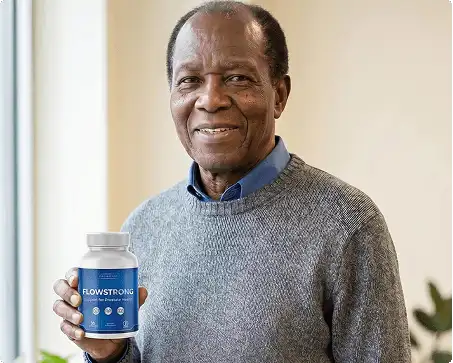
FlowStrong is the most focused prostate-specific formula on CaresDigest. It leads with Saw Palmetto at a clinically relevant 320mg dose — the same amount used in the European studies that showed meaningful improvement in BPH urinary symptoms. Add Beta-Sitosterol (shown in 4 randomized trials to improve peak urinary flow), Lycopene (associated with lower prostate cancer risk in epidemiological studies), and Pumpkin Seed Oil, and you have a formula built entirely around prostate health — not a watered-down men's multivitamin. If prostate specific antigen support and BPH symptom relief are your primary goals, FlowStrong is the first supplement to try. Backed by a 60-day money-back guarantee.
Max Vitalize stands out by combining prostate-specific ingredients with a triple mushroom complex — Lion's Mane, Reishi, and Chaga — that supports immune function and reduces systemic inflammation. Chronic low-grade inflammation is increasingly linked to both BPH progression and elevated PSA levels, making this an intelligent combination. Pygeum Africanum at 100mg is backed by an 18-study Cochrane review showing it reduces nocturia (night-time bathroom trips) and improves urine flow. Zinc at 87% DV supports the prostate's naturally high zinc demand. If you want prostate support plus everyday vitality (and better prostate specific antigen awareness), Max Vitalize is the smarter all-in-one choice.

HoneyPower takes a broader men's health approach — addressing testosterone, libido, and prostate health in one formula. For prostate specific antigen health specifically, it brings Stinging Nettle Root (inhibits DHT binding in prostate tissue, helping reduce BPH-related urinary symptoms) and Boron (some pilot studies suggest Boron supplementation may help reduce prostate specific antigen levels in men with elevated PSA). Tongkat Ali is supported by 2 clinical RCTs for testosterone support. If you're dealing with both high PSA concerns and age-related testosterone decline, HoneyPower bridges both issues with a single supplement. Read our full HoneyPower review for the complete ingredient breakdown.
How to Support Healthy PSA Levels Naturally
If your prostate specific antigen is slightly elevated or trending upward, lifestyle changes can make a meaningful difference — especially when BPH or inflammation is the underlying cause rather than cancer. The following strategies are supported by clinical evidence:
Diet Changes That May Help
- Tomatoes and lycopene: Regular consumption of cooked tomatoes is associated with lower prostate cancer risk in multiple population studies. The compound lycopene is a powerful antioxidant that accumulates in prostate tissue.
- Green tea (EGCG): Epigallocatechin gallate (EGCG), the active compound in green tea, has shown anti-proliferative effects on prostate cells in laboratory studies. Some small RCTs report PSA reductions with green tea supplementation.
- Omega-3 fatty acids: Anti-inflammatory omega-3s (from fatty fish or fish oil supplements) may help reduce the chronic inflammation associated with BPH and elevated PSA.
- Reduce red meat and dairy: High consumption of processed red meat and full-fat dairy is associated with higher prostate cancer risk in several large cohort studies.
- Cruciferous vegetables: Broccoli, cauliflower, and Brussels sprouts contain sulforaphane, which has shown pro-apoptotic (cancer-cell-killing) activity in prostate tissue in laboratory studies.
Exercise
Regular aerobic exercise (at least 150 minutes per week of moderate-intensity activity) is associated with lower PSA levels and reduced BPH symptom severity. Exercise reduces systemic inflammation and helps maintain a healthy body weight — obesity is an independent risk factor for aggressive prostate cancer.
Avoid Factors That Artificially Raise PSA Before Testing
- Abstain from ejaculation for 48 hours before the test
- Avoid vigorous cycling or strenuous exercise for 48 hours before the test
- Inform your doctor about any recent prostate procedures or urinary tract infections
- Disclose all supplements — especially Saw Palmetto — before prostate specific antigen testing
Concerned About Your Prostate Specific Antigen or Prostate Health?
Explore our most-read prostate health guides — compare supplements, understand BPH, and find the right next step for your prostate health journey.
PSA vs. Other Prostate Cancer Tests — Which Is Best?
PSA is the most common prostate screening tool, but it's not the only one. Here's how it compares to newer and complementary tests:
| Test | What It Measures | Invasive? | Accuracy | When Used |
|---|---|---|---|---|
| PSA (Total) | PSA protein in blood | Blood draw only | Moderate | Primary screening |
| Free PSA Ratio | Free vs. bound PSA % | Blood draw only | Better than total PSA alone | After borderline PSA |
| PSA Density | PSA ÷ prostate volume | Blood + ultrasound | Good for BPH vs. cancer | When PSA is borderline |
| 4K Score Test | 4 PSA forms + clinical data | Blood draw only | High | Before deciding on biopsy |
| mpMRI | Prostate imaging | Non-invasive scan | Very high | Before targeted biopsy |
| Prostate Biopsy | Tissue sample | Invasive | Gold standard | When cancer is suspected |
| Digital Rectal Exam | Prostate texture/size | Physical exam | Moderate | Alongside PSA test |
Related Prostate & Men's Health Reading on CaresDigest
Want to go deeper on prostate health? These CaresDigest guides cover the most important topics for men over 40:
- Pills for Enlarged Prostate: Prescription Meds vs. Natural Supplements (2026) — full comparison of tamsulosin, finasteride vs. Saw Palmetto, Beta-Sitosterol
- FlowStrong Reviews 2026 — deep-dive into the most prostate-focused supplement on our site
- Max Vitalize Reviews 2026 — 8-ingredient prostate + vitality formula breakdown
- HoneyPower Reviews 2026 — testosterone + prostate support in one formula
- Vigor Peak Reviews 2026 — men's vitality formula with Muira Puama and Ginkgo Biloba
- EndoPEAK Reviews 2026 — male wellness formula with 8 studied ingredients
- Supplement Facts: Complete Guide to Health Supplements 2026 — how to read supplement labels
📚 Sources & References
- American Cancer Society. ACS Recommendations for Prostate Cancer Early Detection. Accessed October 2026.
- American Urological Association. Early Detection of Prostate Cancer Guidelines. Accessed October 2026.
- U.S. Preventive Services Task Force. Prostate Cancer Screening Recommendation. Accessed October 2026.
- Oesterling JE et al. Serum prostate-specific antigen in a community-based population of healthy men. JAMA. 1993;270(7):860–864.
- Wilt TJ et al. Pygeum africanum for the treatment of BPH. Cochrane Database Syst Rev. 2002.
- Bent S et al. Saw palmetto for benign prostatic hyperplasia. N Engl J Med. 2006;354(6):557–566.
- Giovannucci E et al. Tomato products, lycopene, and prostate cancer. J Natl Cancer Inst. 1999;91(4):317–331.
- Gallardo-Williams MT et al. Boron supplementation inhibits the growth and local expression of IGF-1 in human prostate adenocarcinoma (LNCaP) tumors in nude mice. Toxicol Pathol. 2004.