There is a category of cognitive decline that most adults experience long before dementia risk becomes a clinical concern — and that most conventional health conversations vastly under-address. The name you can't retrieve in a conversation. The sentence you're writing when the second half evaporates. The hours between two and four in the afternoon when your brain feels like it is operating at half voltage, however much coffee you drink. The feeling of trying to process new information through a dense fog that wasn't there a decade ago.
This experience has a neurological name — impaired neural synchronization — and an increasingly well-characterized biological mechanism. The brain does not process information in isolated neurons. It processes it through synchronized oscillating networks: coherent patterns of electrical activity in which neurons across distant brain regions fire in coordinated rhythms to bind sensory inputs, integrate working memory with long-term storage, and generate the sustained attentional states that underlie clear, rapid, confident thinking. When these oscillating networks lose their coherence — their ability to synchronize reliably across the prefrontal cortex, hippocampus, and temporal association areas — the result is exactly what most adults know as brain fog: fragmented, effortful, slow cognitive processing that falls short of what the brain's structural capacity would otherwise support.
The highest-frequency of these cognitive oscillations — gamma waves at 25–100 Hz — are specifically associated with high-level memory consolidation, conscious awareness, and the neural binding that integrates multiple streams of information into coherent experience. And they are among the first oscillatory patterns to degrade with age, metabolic disruption, chronic stress, and sleep fragmentation. The emerging research frontier in cognitive neuroscience asks a provocative question: can external sensory stimulation at gamma-range frequencies — acoustic stimulation in particular — restore and reinforce neural synchronization in aging brains, reducing cognitive symptoms by directly addressing the oscillatory coherence deficit at their neurological root?
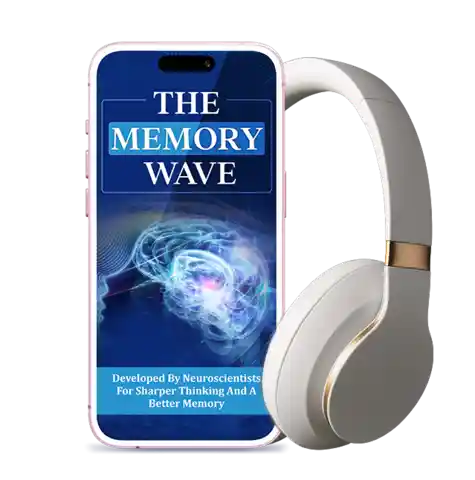
Memory Wave by Neural Revive is a 12-minute daily digital audio session designed exactly around this question. Rather than addressing cognitive performance through botanical ingredients, stimulants, or pharmaceutical intervention, it delivers non-invasive sound frequencies designed to guide the brain toward gamma brainwave activity — the neural state associated with optimal memory consolidation, sustained focus, and sharp mental clarity. In this comprehensive memory wave review, we examine the neuroscience behind gamma-frequency acoustic stimulation, evaluate how Memory Wave's approach compares to published research, assess the user experience, and give an honest verdict on who this program is best suited for in 2026.
🧠 Quick Take: Memory Wave by Neural Revive is a 12-minute digital audio brain session delivered as an instant digital download. Designed to guide the brain toward gamma brainwave activity (25–100 Hz) through safe, non-invasive sound frequencies, it is intended as a once-daily cognitive wellness practice for adults seeking to support mental clarity, focus, word recall, and brain health through a drug-free, non-supplement approach. $39 one-time purchase. 90-day money-back guarantee. Instant access on any device. No subscription.
What Is Memory Wave? A Complete Product Overview
Memory Wave is a digital brain wellness audio program created by Neural Revive. Unlike botanical supplement formulas for cognitive support — such as the 10-ingredient Phytomem One capsule or the VapoMind nootropic formula, which target the metabolic and inflammatory dimensions of cognitive performance — Memory Wave takes a fundamentally different approach: it works through acoustic stimulation of brainwave activity rather than through nutritional or phytochemical pathways.
The product is a 12-minute audio session that uses sound frequencies specifically designed to encourage the brain toward the gamma frequency range (approximately 25–100 Hz) — the oscillatory state associated with the highest-level cognitive functions: active memory consolidation, rapid information processing, heightened attention, and the neural synchronization that underlies clear, confident thinking. The session is delivered as a digital download accessible immediately after purchase on any device — smartphone, tablet, laptop, smart speaker, or desktop — and is designed as a once-daily practice, integrated into the morning routine, a midday mental reset, or any consistent daily window that works for the individual user.
Memory Wave is sold by Neural Revive as a one-time digital purchase at $39. There is no subscription, no recurring billing, and no physical product to ship — the digital file is yours permanently after purchase, with instant access regardless of location or time zone. All purchases are backed by a 90-Day Money-Back Guarantee, one of the most generous evaluation windows available in the cognitive wellness product category.
The Neuroscience Behind Memory Wave: Gamma Brainwaves Explained
To evaluate Memory Wave's approach honestly, it is worth understanding the neuroscience it draws on — both what published research supports and where the evidence frontier currently sits.
Gamma Oscillations (25–100 Hz)
Gamma-frequency neural oscillations are the fastest category of brainwave activity and are specifically linked to the brain's most complex cognitive operations: working memory encoding, cross-regional neural binding (the process that integrates separate perceptual streams into unified conscious experience), sustained attention, and the consolidation of episodic memory into durable long-term storage. Gamma activity declines measurably with normal aging and is further disrupted by metabolic dysfunction, chronic stress, and sleep fragmentation — a pattern that correlates closely with the subjective experience of cognitive aging that millions of adults recognize as brain fog and reduced mental sharpness.
Glymphatic Cleaning Activity
One of the most striking findings to emerge from gamma-frequency stimulation research is its apparent effect on the brain's glymphatic system — the network of fluid-filled channels around blood vessels that the brain uses to clear metabolic waste proteins during periods of coordinated neural activity. Research published from MIT found that 40 Hz gamma-frequency stimulation in animal models increased glymphatic activity and reduced amyloid beta accumulation in brain tissue. While human translation of these findings is still in early stages, the glymphatic-gamma connection represents one of the most neurobiologically compelling mechanisms for why supporting gamma activity could benefit long-term brain health beyond immediate cognitive performance.
Acoustic Brainwave Entrainment
The concept underlying Memory Wave is brainwave entrainment — the well-documented phenomenon in which the brain's neural oscillations synchronize (or "entrain") to repetitive external sensory stimuli. When an external rhythmic signal is introduced — whether visual flicker, rhythmic tactile input, or acoustic tone patterns — the brain's oscillations tend to shift toward the frequency of that signal, a process observed in EEG recordings and attributed to the resonance properties of neural circuits. Acoustic stimulation using binaural beats, monaural beats, amplitude-modulated tones, or frequency-modulated soundscapes has been studied as a method of inducing specific brainwave states, with gamma-range acoustic stimulation showing preliminary evidence of effects on neural synchronization and cognitive performance markers in published research.
Neural Synchronization
The practical cognitive benefit of restored gamma-frequency neural synchronization is the coherence of information processing across brain regions. When the prefrontal cortex, hippocampus, and temporal association cortex synchronize their activity in gamma rhythms, the brain can rapidly bind working memory contents, retrieve long-term memories accurately, and integrate real-time sensory input with stored knowledge — the neural operations that underlie fluent language production (word retrieval), confident decision-making, and the sustained attentional focus that complex tasks require. Memory Wave's design is intended to reinforce this cross-regional synchronization through consistent daily acoustic stimulation, building gamma-frequency coherence as a conditioned neural response to the program's daily practice.
What Does Published Research Say About Gamma-Frequency Acoustic Stimulation?
The research on gamma-frequency sensory stimulation for cognitive support is genuinely emerging and scientifically interesting — with important caveats about where the evidence currently stands.
Landmark work from MIT's Tsai Lab demonstrated that 40 Hz visual flicker stimulation (gamma-frequency light flickering at 40 times per second) reduced amyloid beta load, increased glymphatic activity, and improved memory performance in Alzheimer's mouse models, with effects attributed to entrainment of neural oscillations and increased microglial engagement. These results, published in Nature (2016) and subsequent follow-up studies, generated significant scientific interest and spawned multiple human trial programs including GENUS (Gamma ENtrainment Using Sensory Stimuli) research in human participants. Early human studies using combined 40 Hz auditory and visual stimulation showed measurable EEG changes in gamma-frequency oscillations and preliminary signals of benefit in some cognitive and biomarker measures in Alzheimer's patients, as reported in peer-reviewed publications and covered by Scientific American.
For healthy adults — the primary audience for Memory Wave — research on acoustic brainwave entrainment for cognitive enhancement is positive but more preliminary, with studies showing gamma-frequency auditory stimulation can modulate EEG gamma power, improve sustained attention performance on cognitive tasks, and reduce subjective fatigue in some participant groups. The evidence base is sufficient to support the plausibility of Memory Wave's approach, while the lack of a finished-product clinical trial for Memory Wave itself means users should evaluate the program within a realistic framework: it is a promising, research-grounded cognitive wellness practice, not a clinically validated medical intervention.
How Memory Wave Works: The 3-Step Daily Practice
Download Once, Access Anywhere
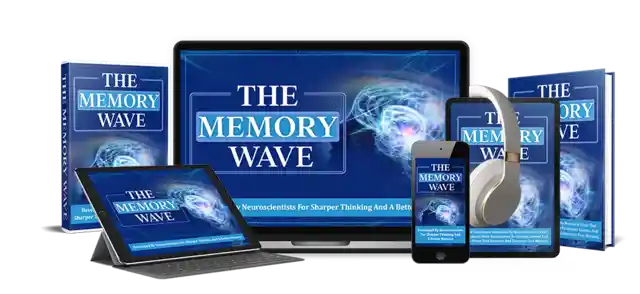
After purchase, Memory Wave is delivered as an instant digital download accessible on any device — smartphone, tablet, laptop, or external speaker. No app required, no account login, no streaming dependency. The file is yours permanently, available offline and without any ongoing subscription. Download to your preferred device and you are ready to start the same day.
12 Minutes Daily — Headphones On, Environment Quiet
Find a comfortable seated or reclined position in a quiet environment. Put on headphones or earbuds — the stereophonic audio design of brainwave entrainment sessions works best through headphones, which deliver the left-ear and right-ear frequency signals independently for maximum entrainment effect. Play the 12-minute audio session. Some users choose morning use to prime the brain's gamma activity for the day ahead; others prefer a midday reset during an afternoon energy dip. Consistency matters more than timing — choose a window you can maintain daily.
Build the Neural Pattern Through Daily Practice
Brainwave entrainment works through neural conditioning — the brain's learned tendency to shift toward a frequency state it has consistently experienced. A single session produces an immediate, transient shift in neural oscillation patterns. Daily practice over weeks builds a more durable conditioned response, strengthening the brain's capacity to access gamma-coherent states more readily and sustaining the cognitive benefits of gamma synchronization beyond the session window. This is why the 90-day evaluation period is well-matched to the program's mechanism: the most significant cognitive benefits — word recall, sustained focus, working memory performance — build cumulatively over weeks of consistent daily practice.
Memory Wave Pros and Cons: An Honest Assessment
Pros
- Non-pharmacological — no drugs, no supplements, no ingredient interactions
- Gamma-frequency acoustic stimulation has genuine, published research interest
- Completely non-invasive — just 12 minutes of audio daily
- Simple to integrate — works with any device, no special equipment
- Permanent digital access — no subscription, no recurring cost
- $39 single price — lowest cost per use of any brain wellness category
- 90-day money-back guarantee — most generous in the cognitive wellness category
- No contraindications for healthy adults (no ingredient interactions, no stimulant effects)
- Complements any other cognitive support strategy (diet, exercise, supplements)
- Usable at home, in office, or while traveling
Cons
- No finished-product clinical trial for Memory Wave specifically
- Results are experiential — no biomarker measurement provided
- Requires daily consistency for cumulative effect — not an acute fix
- Headphones recommended for optimal entrainment effect
- Not suitable for individuals with epilepsy or auditory hypersensitivity (consult physician)
- Results vary with listening environment and consistency
- Digital-only — no physical product
Memory Wave vs. Supplement-Based Brain Support
It is worth positioning Memory Wave clearly relative to the botanical supplement approaches to cognitive support that make up most of the brain health product landscape.
Botanical cognitive support supplements — such as the 10-ingredient Phytomem One (Saffron Extract, Fucoxanthin, Berberine, Oleuropein, Fucoidan, and five additional compounds), or the amino acid and herbal formula approach of VapoMind — address cognitive performance through phytochemical pathways: improving brain glucose metabolism (Berberine AMPK, Ceylon Cinnamon, Corosolic Acid), reducing neuroinflammation (Oleuropein, Saffron, Fucoidan), and supporting neuroplasticity (Fucoxanthin BDNF). These approaches require daily intake over weeks and address the metabolic and inflammatory roots of cognitive performance decline.
Memory Wave addresses a different — and complementary — dimension of cognitive performance: the oscillatory coherence of neural activity. It does not reduce neuroinflammation, improve brain glucose metabolism, or modulate neurotransmitter chemistry. What it does is directly engage the brain's oscillatory dynamics — the electrical synchronization patterns that determine how efficiently neurons collaborate on cognitive tasks — through the acoustic entrainment mechanism. For adults whose cognitive underperformance has a strong oscillatory coherence component (poor neural synchronization, diminished gamma activity), Memory Wave may provide benefits that metabolic support supplements do not. For the most comprehensive cognitive support strategy, the two approaches — acoustic entrainment and metabolic/botanical phytonutrient support — are potentially complementary rather than competitive.
Blood sugar management also has a direct connection to cognitive performance — the same insulin signaling dysfunction that drives metabolic disease simultaneously impairs neuronal glucose uptake and reduces neural energy for oscillatory coherence. Our reviews of HoneyHarmony and Vivo Tonic examine dedicated blood sugar metabolic formulas with direct relevance to cognitive energy. Poor sleep is both a consequence and a primary driver of reduced gamma coherence — sleep is when the brain performs its most significant glymphatic cleaning, and sleep-disrupted adults show measurably lower gamma activity during waking hours; our review of The Downshift sleep audio program covers a complementary audio-based approach to restorative sleep quality. Nerve health connects to cognitive performance through shared neurological infrastructure — our reviews of NerveHoney and Nervecept examine peripheral nerve support formulas with mechanistic relevance to overall neural health. For gut-brain axis approaches — an increasingly recognized contributor to cognitive performance through vagal nerve inflammatory signaling — our review of Villora gut support examines the microbiome dimension of brain health.
Memory Wave Customer Reviews: Real User Experiences
Users of Memory Wave describe results that align closely with the program's core mechanism — improvements in the experiential qualities of neural synchronization: morning mental clarity, reduced afternoon brain fog, faster word retrieval during conversation, and a calmer, more focused cognitive state during demanding tasks.
"I've been doing the 12-minute session every morning for about six weeks. The first thing I noticed was sharper mornings — I used to feel foggy until well after my second coffee. Now I feel clear and focused by the time I sit down to work. My word recall during conversations has genuinely improved. Easy to stick to and no side effects of any kind."
"Skeptical at first because it's just audio. But after a month of daily use I can say my afternoon clarity is noticeably better and I feel calmer and more focused during complex tasks. Worth the $39 just for the daily mental reset it provides."
"I use it midday during my lunch break and it's genuinely become my favorite part of the day — 12 minutes of complete mental reset. I come back to work feeling calm, clear and sharp in a way that two cups of coffee never achieved. I gave it four stars instead of five only because I wish there were a few different session lengths. The 12-minute version is excellent."
The pattern across user reports reflects the cumulative, conditioning-based nature of brainwave entrainment benefits: early improvements (1–3 weeks) in morning clarity and reduced afternoon fog; deeper improvements in word recall, sustained focus, and cognitive stamina developing over 4–8 weeks of consistent daily practice. The 90-day guarantee window is well-sized for the program's mechanism — it provides a risk-free evaluation that extends meaningfully beyond the initial adaptation period into the deeper cumulative benefit phase.
Memory Wave Pricing: What You Get for $39
Memory Wave by Neural Revive
At $39 for permanent digital access, Memory Wave is one of the lowest per-use cost cognitive wellness investments available — a 90-day daily practice works out to roughly $0.43 per session, without ongoing subscription costs, shipping fees, or monthly repurchase commitments. For adults who are already investing in dietary supplements, botanical formulas, or other cognitive support products, Memory Wave's acoustic stimulation approach adds a fundamentally different neurological mechanism at a one-time, low price point with zero ingredient overlap or interaction risk.
Try Memory Wave — 12 Minutes a Day, 90-Day Risk-Free
Non-invasive gamma brainwave audio · daily mental clarity practice · $39 once · instant download · 90-day guarantee · no subscription · by Neural Revive
Get Memory Wave at the Official Price →The 90-Day Money-Back Guarantee
90-Day Money-Back Guarantee
Every Memory Wave purchase is covered by a 90-Day Money-Back Guarantee. If you are not satisfied with your experience within 90 days of purchase, contact the support team, and you will receive a full refund. Memory Wave is sold and fulfilled through ClickBank — a trusted digital retail platform that processes refund requests directly. The 90-day window provides generous time to evaluate the program's effects across the full arc of brainwave entrainment conditioning: from the initial acute responses of the first two weeks, through the deeper cumulative improvements in neural synchronization and cognitive performance that typically develop over 6–10 weeks of daily practice. Using the full 90 days as an honest evaluation window — with consistent daily sessions and complementary lifestyle habits — gives the program the conditions to demonstrate its full cognitive impact before any commitment is finalized.
Memory Wave Frequently Asked Questions
Our Verdict: Is Memory Wave Worth It in 2026?
Memory Wave occupies a genuinely distinct and scientifically interesting position in the 2026 cognitive wellness landscape. While the supplement-based brain health category — including botanical formulas like Phytomem One and established nootropic blends like VapoMind — addresses the metabolic and phytochemical dimensions of cognitive performance, Memory Wave addresses the oscillatory coherence dimension: the electrical synchronization patterns that determine how efficiently neurons collaborate on memory, attention, and language tasks. This is a neurologically meaningful distinction, not just a marketing one, and it means the two approaches address different root contributors to cognitive underperformance.
The honest assessment of Memory Wave's evidence position: gamma-frequency acoustic stimulation has a genuine and growing published research record, with the most compelling findings coming from MIT-led research on 40 Hz multi-sensory stimulation. Memory Wave does not have a finished-product clinical trial, and the gap between the most robust published research (animal models of Alzheimer's disease, combined audio-visual gamma stimulation in elderly populations) and the daily use case of a healthy adult seeking sharper cognition requires acknowledgment. What it does offer is: a plausible neurological mechanism, an exceptionally low-risk intervention profile (no drugs, no supplements, no ingredient interactions), a daily practice accessible to anyone with a device and headphones, and a $39 one-time price with a 90-day refund window that makes the cost of an honest evaluation essentially zero.
For adults interested in a drug-free, supplement-free, side-effect-free approach to daily cognitive support — particularly as a complement to metabolic and lifestyle foundations — Memory Wave represents a genuinely novel and low-risk addition to a comprehensive brain wellness strategy.
Try Memory Wave Risk-Free for 90 Days
12-minute daily gamma brainwave audio session · non-invasive · $39 one-time · instant download · no subscription · 90-day guarantee · by Neural Revive
Get Memory Wave at the Official Price →Disclosure: CaresDigest may earn an affiliate commission if you purchase Memory Wave through links on this page. This does not affect our editorial independence or the integrity of our review. These statements have not been evaluated by the Food and Drug Administration. Memory Wave is not intended to diagnose, treat, cure, or prevent any disease. It is a digital audio wellness program, not a medical treatment. Individual results may vary. Adults with epilepsy, photosensitive seizure disorders, auditory hypersensitivity, or other neurological conditions should consult a qualified healthcare provider before using any brainwave entrainment audio product. The research cited relates to gamma-frequency sensory stimulation research generally; it does not constitute clinical validation of Memory Wave specifically. Always consult a qualified healthcare provider for diagnosed neurological or cognitive concerns.