
Smoking deposits tar and over 7,000 chemicals into your airways with every puff. It destroys the tiny hair-like structures (cilia) that keep your lungs clean, triggers chronic inflammation, and steadily destroys the air sacs (alveoli) that transfer oxygen into your blood. The result over years: chronic bronchitis, emphysema, COPD, and a dramatically elevated risk of lung cancer. The good news — quitting smoking stops further destruction, and the right lung health supplements support your body's partial recovery.
What Smoking Actually Does to Your Lungs
Most people know smoking is bad for lungs. But very few people understand exactly how the damage happens — and why it often stays silent for 10–20 years before symptoms appear.
When you inhale cigarette smoke, it travels through your trachea, into the bronchial tubes, and down into the tiny air sacs called alveoli. Along the way, it does several things simultaneously:
Destroys Cilia
Cilia are microscopic hair-like structures lining your airways. They beat in waves to push mucus, dust, and bacteria out of your lungs. Smoking paralyzes cilia within minutes of the first puff, and with chronic exposure, destroys them entirely. Without cilia, your lungs cannot clear themselves — leading to the classic "smoker's cough" as the only available cleaning mechanism.
Triggers Chronic Airway Inflammation
Your immune system recognizes cigarette smoke as a threat and floods the airways with inflammatory cells — primarily neutrophils and macrophages. In a healthy response, inflammation resolves and heals. In a smoker's airways, the inflammation never stops. This persistent, low-grade inflammation thickens airway walls, narrows bronchial passages, and creates excess mucus — the core mechanism of chronic bronchitis.
Deposits Tar in Alveoli
The dark, sticky substance known as tar accumulates in the tiny air sacs deep in the lungs. Tar carries carcinogens directly to the alveolar tissue, triggers macrophage overactivation, and causes oxidative stress that slowly destroys alveolar walls. Once alveoli are destroyed, they do not regenerate. This is how emphysema develops.
Starves Blood of Oxygen
Carbon monoxide in cigarette smoke binds to hemoglobin (your blood's oxygen carrier) with 200 times more affinity than oxygen itself. This means smokers' blood carries significantly less oxygen per breath — causing fatigue, breathlessness during activity, and reduced exercise capacity even before visible lung damage develops.
Causes DNA Mutations Leading to Cancer
At least 70 of the 7,000+ chemicals in cigarette smoke are proven carcinogens. These chemicals directly damage DNA in lung cells. When DNA repair systems are overwhelmed, mutations accumulate — eventually producing cells that grow and divide uncontrollably. Smokers are 15–30 times more likely to develop lung cancer than non-smokers.
Lung Inflammation from Smoking: What's Happening Inside
Lung inflammation is the body's initial defense response — but smoking makes it chronic and destructive.
In a healthy lung, the immune system activates briefly when a pathogen enters, eliminates the threat, and returns to baseline. In a smoker's lung, cigarette chemicals trigger immune activation with every single puff. The inflammation never gets a chance to resolve.
The Two Types of Smoking-Related Lung Inflammation
Airway inflammation (bronchitis pattern): The bronchial tubes become swollen and lined with excess mucus. Airways narrow, breathing resistance increases, and chronic cough develops. This pattern is directly responsible for chronic bronchitis — diagnosed when a smoker has a productive cough for at least 3 months in 2 consecutive years.
Alveolar inflammation (emphysema pattern): Inflammatory cells release enzymes (especially matrix metalloproteinases and elastases) that digest the elastic protein scaffolding of alveolar walls. As walls dissolve, air sacs merge into large, useless pockets that cannot exchange oxygen. This creates the classic "barrel chest" appearance and the profound breathlessness of emphysema.
Key Inflammatory Markers Elevated in Smokers
- IL-8 (Interleukin-8) — recruits neutrophils to the airway; chronically elevated in COPD
- TNF-alpha (Tumor Necrosis Factor) — promotes systemic inflammation, muscle wasting
- CRP (C-Reactive Protein) — elevated in active smokers, drops within weeks of quitting
- Neutrophil Elastase — enzyme that destroys alveolar tissue; elevated in all smokers
- Oxidized LDL — accelerates cardiovascular damage that often accompanies lung disease
Conditions Caused by Smoking Lung Damage
| Condition | What Happens | Severity | Reversible? |
|---|---|---|---|
| Chronic Bronchitis | Persistent airway inflammation, excess mucus, narrowed bronchial passages | Moderate | Partially — improves after quitting |
| Emphysema | Alveolar wall destruction, air-trapping, severe breathlessness | Severe | No — alveoli do not regenerate |
| COPD | Combined chronic bronchitis + emphysema; progressive airflow limitation | Severe | No cure — quitting slows progression |
| Lung Cancer | Malignant cell growth driven by carcinogen-induced DNA mutations | Critical | Depends on stage — early detection crucial |
| Pulmonary Fibrosis | Scar tissue replaces normal lung tissue, reducing elasticity | Severe | No — fibrotic tissue is permanent |
| Smoker's Cough | Chronic cough from mucus accumulation and lost cilia function | Mild–Moderate | Yes — often resolves within months of quitting |
| Respiratory Infections | Impaired immune defenses; frequent pneumonia, bronchitis flares | Moderate | Improved after quitting; lower frequency |
| Sleep Apnea | Airway inflammation and mucus increase upper airway collapse during sleep | Moderate | Partially — improves with quitting |
Vaping vs. Smoking: Is Vaping Safer for Lungs?
A common misconception is that vaping is "safe" compared to smoking. It is different — but it is not safe.
- No tar: True — vaping does not produce combustion byproducts like tar or carbon monoxide. This removes two significant harm pathways.
- Still harmful: Vape aerosols contain ultrafine particles that penetrate deep into alveoli, heavy metals (nickel, tin, lead from heating coils), and flavoring compounds like diacetyl — linked to popcorn lung (bronchiolitis obliterans).
- EVALI risk: E-cigarette or vaping product use-associated lung injury (EVALI) is a documented, sometimes fatal inflammatory lung condition. As of 2024, the CDC had investigated over 2,800 cases, with 68 confirmed deaths.
- Nicotine delivery: Most vaping products deliver nicotine — maintaining dependence and its cardiovascular effects even without tobacco combustion.
The verdict: switching from cigarettes to vaping likely reduces some lung harm, but vaping is not a safe habit. It is not a medically approved smoking cessation tool.
Secondhand Smoke and Lungs: The Involuntary Risk
Secondhand smoke — also called environmental tobacco smoke — contains the same 7,000+ chemicals as mainstream smoke, often in higher concentrations. Because sidestream smoke from the burning end of a cigarette burns at a lower temperature, it actually produces more fine particles than the smoke inhaled by the smoker.
- Non-smokers regularly exposed to secondhand smoke have a 20–30% higher lung cancer risk
- Secondhand smoke causes approximately 7,300 lung cancer deaths per year in the United States
- Children exposed to secondhand smoke have higher rates of asthma, ear infections, bronchitis, and pneumonia
- Exposure during pregnancy increases risk of sudden infant death syndrome (SIDS) and low birth weight
There is no safe level of secondhand smoke exposure. If you live or work around smokers, lung support nutrients — especially Vitamin C and NAC — become even more relevant for daily use.
How Lungs Recover After Quitting Smoking
Quitting smoking starts a cascade of positive changes almost immediately. Here is what the science shows about the recovery timeline:
Key Nutrients That Support Lung Health After Smoking
Specific nutrients have documented roles in lung tissue repair, airway inflammation reduction, and mucus clearance. These are the ingredients to look for in any lung support supplement:
| Nutrient | How It Helps Lungs | Evidence |
|---|---|---|
| NAC (N-Acetyl Cysteine) | Breaks down mucus (mucolytic), replenishes glutathione (master antioxidant), protects against oxidative lung damage | Strong |
| Vitamin C | Collagen synthesis for airway repair; potent antioxidant protecting alveoli; smokers deplete Vitamin C 30% faster than non-smokers | Strong |
| Quercetin | Flavonoid that inhibits inflammatory cytokines (IL-8, TNF-alpha) in airway tissue; reduces histamine-driven airway constriction | Moderate–Strong |
| Magnesium | Relaxes bronchial smooth muscle; IV magnesium is used in ER asthma treatment; oral supplementation improves breathing in respiratory conditions | Strong |
| Mullein Leaf | Traditional herb used for centuries to soothe inflamed airways; contains saponins that help loosen mucus and ease coughs | Traditional + Early |
| Thyme Extract | Antimicrobial and antispasmodic; shown in European studies to reduce COPD-related cough frequency and severity | Moderate |
| Eucalyptus (Cineole) | The active compound 1,8-cineole reduces airway inflammation markers, approved in Germany for COPD management | Moderate–Strong |
| Zinc | Critical for immune defense in lung tissue; smokers have measurably lower zinc levels; supports wound healing in airways | Moderate |
| Vitamin D3 | Deficiency linked to increased COPD severity; D3 receptors found throughout lung tissue; modulates immune response to respiratory infections | Strong |
Best Lung Health Supplements for Smokers & Former Smokers (2026)
Based on ingredient transparency, dose quality, and user feedback, here are the top respiratory support supplements available in 2026. All three are reviewed in detail on CaresDigest.

Breathizen stands out in the respiratory supplement space because of its spray delivery format. Unlike capsules that must be digested and absorbed, a sublingual spray allows key actives — especially Mullein and Eucalyptus — to reach mucosal tissue faster. This matters most for smokers dealing with thick mucus, morning congestion, and bronchial irritation.
The formula contains five clinically relevant ingredients at doses that match what the research suggests: Mullein Leaf for mucus clearance, Thyme for airway antimicrobial support, Eucalyptus (1,8-cineole) for bronchial smooth muscle relaxation, Quercetin for anti-inflammatory action, and Vitamin C for airway tissue repair.
- Spray format — faster mucosal delivery vs. capsules
- 5 clean, research-backed ingredients — no proprietary blend
- Mullein + Eucalyptus addresses mucus AND inflammation simultaneously
- No stimulants, no harsh chemicals — safe for daily use
- Positive user reports: clearer mornings, less cough within 2–4 weeks
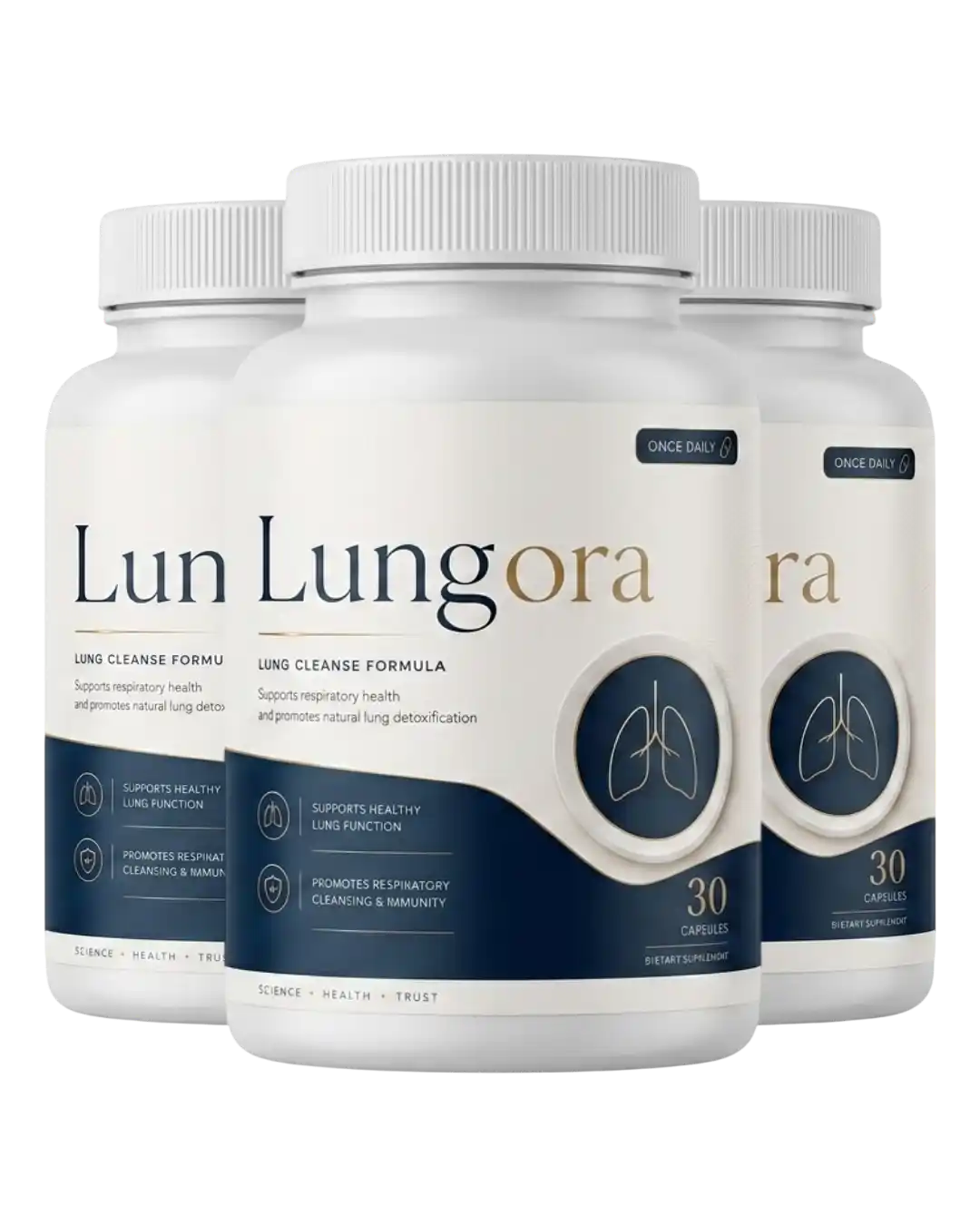
Lungora takes a different approach from Breathizen — instead of fast-acting surface relief, it works at the cellular level through sustained daily supplementation. Its standout ingredient is NAC (N-Acetyl Cysteine) at a meaningful dose — NAC is one of the most studied compounds for lung health, mucus reduction, and oxidative damage protection in respiratory tissue.
The combination of NAC + Quercetin + Vitamin C creates a powerful antioxidant triad that targets both inflammation and oxidative damage — the two core mechanisms of smoking-related lung injury. Magnesium and Vitamin D3 address the systemic deficiencies that make smokers' lungs more vulnerable to further damage.
- Includes NAC — the most evidence-backed ingredient for smokers' lung health
- 6-ingredient transparent formula — no hidden blends
- NAC + Quercetin + Vitamin C triple antioxidant action
- Addresses Vitamin D deficiency common in COPD patients
- Suitable for long-term daily use — no stimulants or habit-forming compounds

Vapocept is an interesting option for smokers who recognize that cigarettes affect more than just the lungs. Chronic smoking and nicotine withdrawal both affect brain chemistry — dopamine pathways, focus, and mood. Vapocept's formula bridges the gap between respiratory support and cognitive wellness, making it especially relevant for those in the process of quitting.
Its respiratory components target airway inflammation while its cognitive ingredients support neurotransmitter balance during nicotine withdrawal — a practical combination that addresses the full physical picture of cigarette damage beyond just the lungs.
- Dual lung + brain support — relevant for quitting smokers
- Addresses cognitive fog common during nicotine withdrawal
- 6 clean ingredients with transparent labeling
- Complements breathing exercises and quit-smoking programs
- No nicotine replacement — supports natural neurological rebalancing
Breathizen vs Lungora vs Vapocept: Side-by-Side
| Feature | Breathizen | Lungora | Vapocept |
|---|---|---|---|
| Format | Liquid Spray | Capsule | Capsule |
| Key Ingredients | Mullein, Thyme, Eucalyptus, Quercetin, Vit C | NAC, Quercetin, Vit C, Magnesium, Zinc, D3 | Respiratory + cognitive blend |
| Best For | Immediate mucus / congestion relief | Long-term lung tissue repair | Quitting smokers with brain fog |
| Includes NAC | ✘ No | ✔ Yes | ✘ No |
| Anti-inflammatory | ✔ Strong | ✔ Strong | ✔ Moderate |
| Speed of Action | Fast (sublingual) | Gradual (daily use) | Gradual (daily use) |
| Cognitive Support | ✘ No | ✘ No | ✔ Yes |
| Stimulant Free | ✔ Yes | ✔ Yes | ✔ Yes |
| Our Rating | ★★★★★ 9.5/10 | ★★★★½ 9.1/10 | ★★★★ 8.6/10 |
Breathing Exercises That Actually Help Smokers' Lungs
Lung supplements work best when combined with daily breathing practice. These two exercises are the most evidence-backed for smokers and COPD patients:
1. Pursed-Lip Breathing
Breathe in slowly through your nose for 2 counts. Pucker your lips like you're whistling, then breathe out slowly through pursed lips for 4 counts. This technique keeps airways open longer during exhalation, prevents air trapping, and helps move stale air out of the lungs. Practice this during any activity that causes breathlessness.
2. Diaphragmatic (Belly) Breathing
Lie on your back with one hand on your chest and one on your belly. Breathe in slowly through your nose, letting your belly rise while keeping your chest still. Exhale slowly through pursed lips. The goal is to use your diaphragm — the primary breathing muscle — more efficiently, reducing the workload on smaller accessory muscles that smokers overuse.
Practice each technique 10–15 minutes daily. Studies show significant improvement in dyspnea (breathlessness) scores and exercise tolerance within 4–8 weeks of consistent practice.
Ready to Support Your Lung Health?
Whether you're a current smoker, recently quit, or dealing with long-term smoke exposure — Breathizen and Lungora are our two top-rated lung support supplements. Both use clean, transparent ingredient lists with no proprietary blends.
Who Is Most at Risk from Smoking Lung Damage
Not every smoker develops COPD or lung cancer — but certain factors dramatically increase the risk:
- Pack-year history: 1 pack per day × 20 years = 20 pack-years. The risk threshold for CT screening is 20+ pack-years — this is when lung cancer risk becomes clinically significant
- Starting age: Smokers who start before age 18 develop worse lung function trajectories and higher cancer risk than those who start later
- Genetics (Alpha-1 Antitrypsin deficiency): A hereditary deficiency of a key lung-protective protein that dramatically accelerates emphysema in smokers
- Occupational exposures: Smokers who also work around asbestos, silica, coal dust, or chemical fumes face compounded risk — the carcinogenic effects multiply rather than add
- Co-existing asthma: Smokers with pre-existing asthma develop COPD at a faster rate and with worse outcomes
- Respiratory infections in childhood: People with a history of serious respiratory infections are more vulnerable to smoking-induced damage
Lung Supplements: What They Can and Cannot Do
What Supplements Can Do
- Reduce airway inflammation markers
- Support mucus clearance (NAC, Mullein)
- Protect remaining alveoli from oxidative damage
- Support collagen repair in airway tissue
- Improve breathing comfort and morning congestion
- Address nutritional deficiencies from smoking
- Support immune defense against respiratory infections
What Supplements Cannot Do
- Reverse destroyed alveoli or regrow lung tissue
- Cure COPD or pulmonary fibrosis
- Replace quitting smoking as the primary intervention
- Eliminate cancer risk caused by prior smoke exposure
- Replace prescribed bronchodilators or corticosteroids
- Undo 20+ years of heavy smoking damage
Related Reading on CaresDigest
- Breathizen Benefits: 5-Ingredient Lung Spray — Full Review
- Breathizen 5-Lung Spray Reviews: What Users Are Saying
- Lungora Benefits: 6-Ingredient Respiratory Capsule Review
- Lungora Reviews: Real User Results 2026
- Vapocept: 6-Ingredient Cognitive & Respiratory Capsule
- Vapocept Reviews: User Results & Verdict
- Supplement Facts: Complete Guide to Health Supplements 2026
- PSA Guide 2026: Prostate Health for Men Over 40
- Pills for Enlarged Prostate: What Actually Works 2026
- Best Men's Health Supplements 2026
- NeuroRecall Reviews: Brain Health After Quitting Smoking
- GlycoDefender: Blood Sugar Support for Smokers' Metabolic Health
Frequently Asked Questions
Sources & References
- U.S. Centers for Disease Control and Prevention. Health Effects of Cigarette Smoking. cdc.gov
- U.S. National Library of Medicine. N-Acetylcysteine in the Management of COPD. PubMed
- Kirkham PA, Barnes PJ. Oxidative stress in COPD. Chest. 2013;144(1):266–273. PubMed
- American Lung Association. COPD Causes and Risk Factors. lung.org
- Forster A, et al. Quercetin and Lung Inflammation — Systematic Review. Nutrients. 2022. PubMed
- Rabe KF, Watz H. Chronic obstructive pulmonary disease. The Lancet. 2017;389(10082):1931–1940. PubMed
- Global Initiative for Chronic Obstructive Lung Disease (GOLD). GOLD 2026 Report. goldcopd.org
- CDC. EVALI: E-cigarette or Vaping Product Use-Associated Lung Injury. cdc.gov
- U.S. Surgeon General. The Health Consequences of Smoking — 50 Years of Progress. hhs.gov
This article is for informational and educational purposes only. It does not constitute medical advice, diagnosis, or treatment. Information about smoking-related lung conditions, COPD, and lung health supplements is intended to complement — not replace — guidance from your healthcare provider. If you have symptoms of COPD, lung cancer, or any respiratory condition, consult a licensed physician or pulmonologist immediately. Never delay seeking medical attention based on information read in this guide. These statements have not been evaluated by the FDA.